
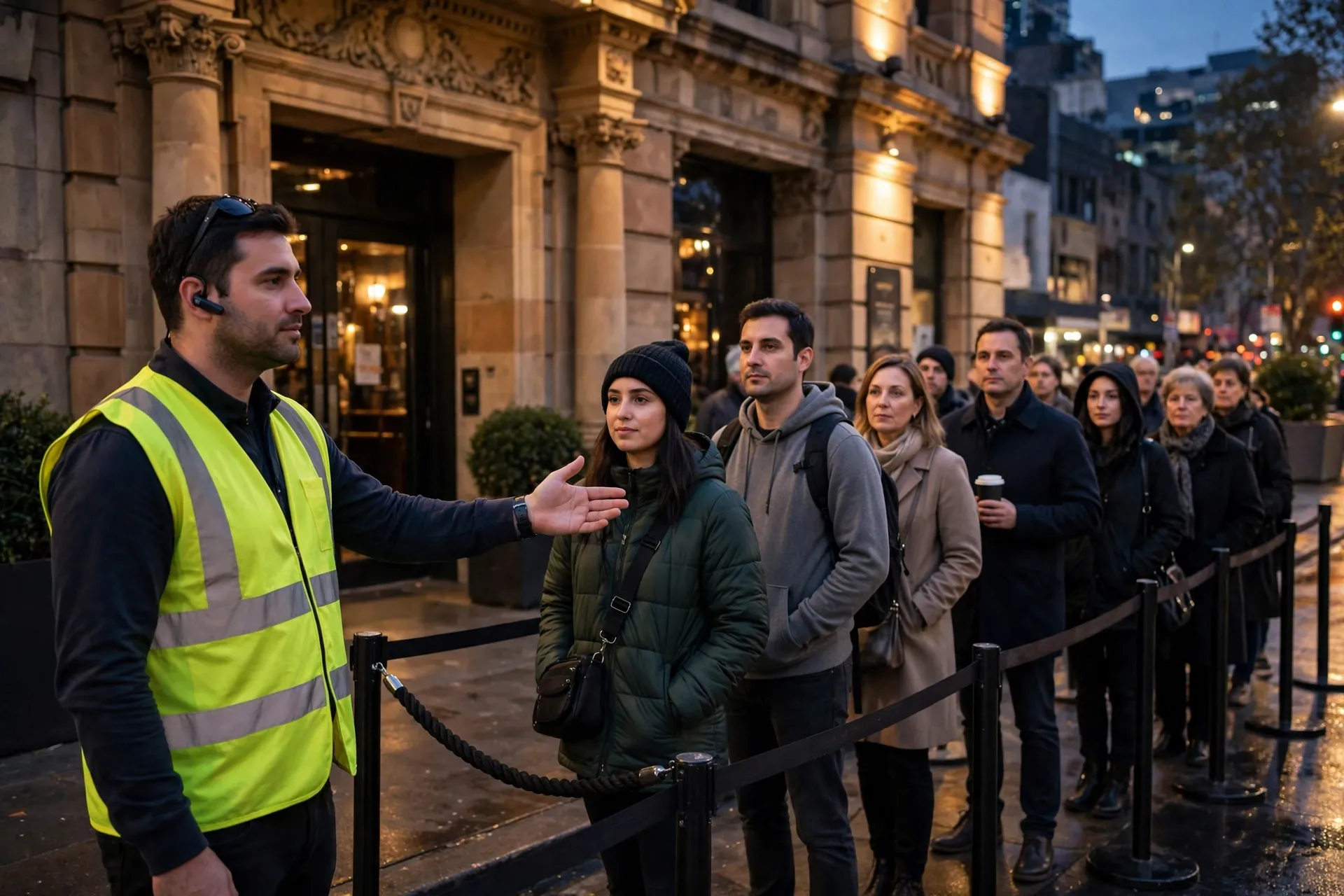
The short answer A security guard protects a site, its people and its property — access control, patrols, monitoring and reporting. A crowd controller manages crowds and entry at venues and events — ID checks, entry screening, capacity, behaviour monitoring and de-escalation. Crowd control is a separate licensed activity under Victorian security licensing. If your […]
The short answer
A security guard protects a site, its people and its property — access control, patrols, monitoring and reporting. A crowd controller manages crowds and entry at venues and events — ID checks, entry screening, capacity, behaviour monitoring and de-escalation. Crowd control is a separate licensed activity under Victorian security licensing. If your main risk is the crowd at the door, you need a crowd controller. If your main risk is the site itself, you need a security guard. Many venues need both, in different posts.
The two roles look similar from the outside. Both wear a uniform, both stand at a door, both deal with the public. But the licence, the duties and the skills are different, and hiring the wrong role for the job leaves the real risk uncovered. This guide explains the difference so you can brief the right cover.
What a security guard does
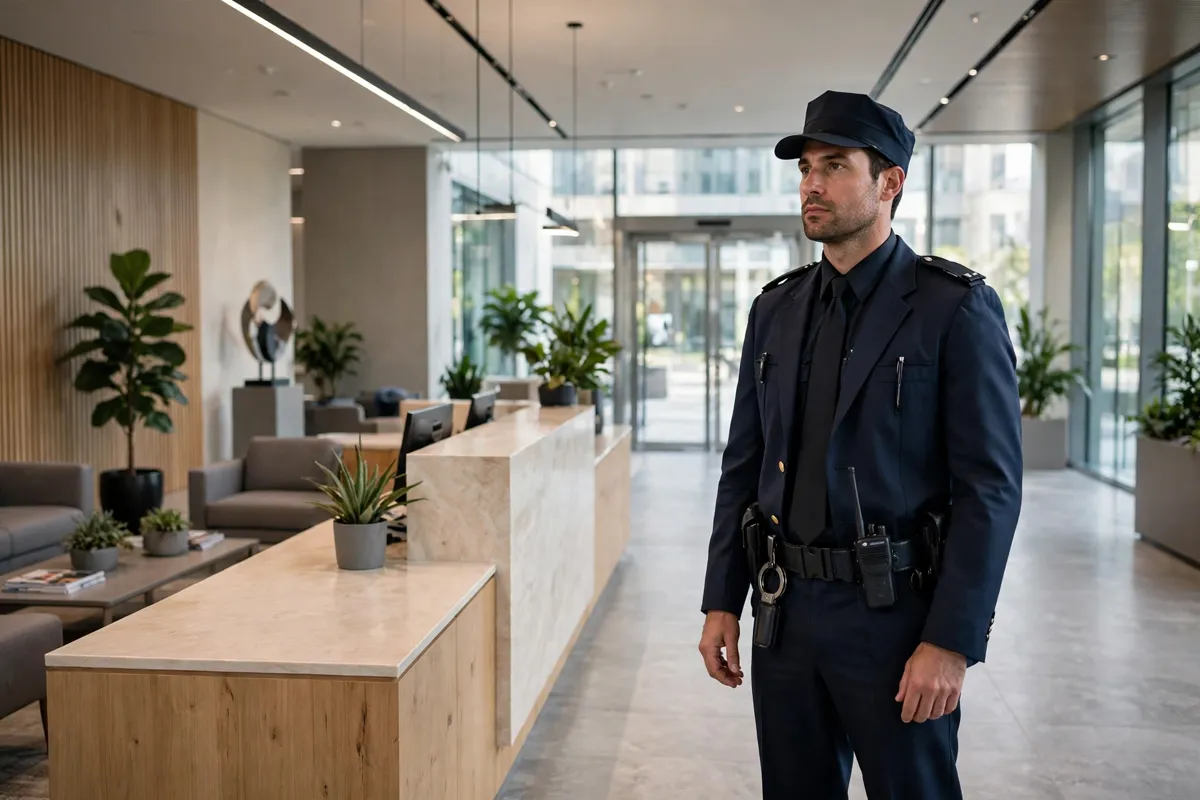
A security guard’s job is the site. A guard controls who enters, watches for problems, patrols the property, responds to incidents and writes reports. Typical guard duties include:
- Access control — checking who is allowed on site, signing visitors in, issuing passes.
- Patrols — walking the site on a set route, checking doors, windows, gates and equipment.
- Monitoring — watching CCTV and alarms, and responding when something triggers.
- Incident response — observing, recording and reporting incidents, and escalating to a supervisor or emergency services when needed.
- Reporting — shift logs, incident reports and handovers that keep the next shift informed.
Guards work at offices, warehouses, residential buildings, construction sites, retail centres, data centres and anywhere that needs continuous site protection. Their value is presence and attention: someone whose whole job is to notice what is wrong and act on it. A good guard knows the site, knows the rules, and knows when to escalate instead of handling something alone.
What a crowd controller does
A crowd controller’s job is the crowd. Crowd controllers work where people gather — pubs, clubs, bars, concerts, festivals, sporting events and ticketed venues — and their focus is the safe movement and behaviour of that crowd. Typical crowd controller duties include:
- ID checks — verifying age and identity at the door.
- Entry screening — checking bags and managing entry conditions.
- Capacity management — keeping numbers within the venue’s allowed capacity.
- Behaviour monitoring — watching the crowd for early signs of trouble.
- De-escalation — calming conflicts before they become incidents, and refusing entry when the venue’s conditions require it.
- Queue and flow management — keeping entries, exits and pathways clear and safe.
Crowd control is about reading people, not just watching property. A crowd controller must judge mood, spot trouble early, communicate clearly under pressure and stay calm when others are not. The work is physical, social and fast-moving, and it follows the venue’s licence conditions closely.
Side-by-side comparison
| Question | Security guard | Crowd controller |
|---|---|---|
| Main focus | The site, its people and its property | The crowd and the entry |
| Typical workplace | Offices, warehouses, construction sites, retail, data centres | Pubs, clubs, bars, concerts, festivals, ticketed venues |
| Core duties | Access control, patrols, monitoring, incident response, reporting | ID checks, entry screening, capacity, behaviour monitoring, de-escalation |
| Licence | Victorian security licence for guarding activity | Victorian security licensing for crowd control activity |
| Key skill | Attention to site detail and consistent reporting | Reading a crowd and calming conflict early |
| Works with | Site managers, facilities teams, supervisors | Venue managers, event organisers, bar staff, police |
The licence distinction
In Victoria, security work is licensed, and the licence covers the activity being performed. Guarding and crowd control are different licensed activities. When you hire, confirm that the people assigned to your job hold current licensing for the specific activity they will perform — guarding for guard posts, crowd control for crowd posts.
This matters for more than paperwork. A venue that puts a guard on a crowd-control post, or a site that puts a crowd controller on a lone night-guard post, has the wrong person in the wrong job. Ask your provider which licence each assigned officer holds for the post they will fill, and get the answer in writing. JM Security Group operates under Victorian security licence VIC Z70-400-80S, and confirms licensing for the activity before the first shift.
Five questions that decide which role you need
1. Where is the risk — the site or the crowd? If the risk is theft, vandalism, unauthorised access or after-hours intrusion, that is a guarding job. If the risk is crowd behaviour, entry disputes, overcrowding or intoxicated patrons, that is a crowd control job.
2. Is there a licensed venue involved? Pubs, clubs and bars with liquor licences need crowd controllers who understand venue licence conditions, ID checks and refusal of entry. An office lobby does not.
3. Are people gathering or passing through? A crowd that gathers, drinks, dances or waits in queues needs crowd management. A stream of staff, contractors and visitors moving through a site needs access control.
4. What happens at the door? If the door needs ID checks, bag screening, capacity counts and behaviour calls, that is crowd control. If the door needs sign-in, pass issue and contractor verification, that is guarding.
5. What hours need cover? Crowd control peaks with events and venue hours — nights and weekends. Guarding often runs around the clock, including the quiet hours when nobody is watching.
When you need both
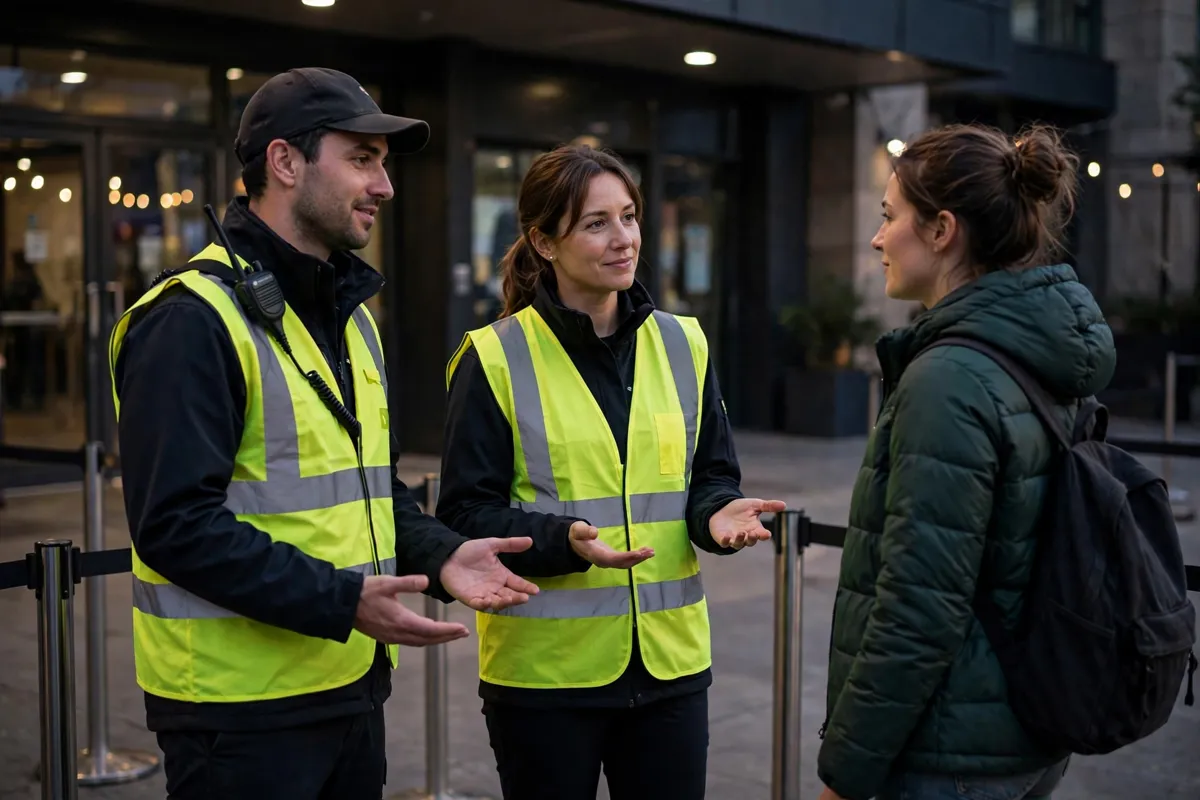
Many sites need both roles, in different posts at different times. A large event needs crowd controllers at the gates and guards on the back-of-house, asset and perimeter posts. A shopping centre needs retail guards on the floor and crowd controllers at a major promotion or late-night event. A construction site that hosts a public open day needs guards on the site and crowd controllers at the public entry.
When you brief a provider, describe each post separately: where it is, what the person there does, and which licence the post requires. A good provider will build a roster that matches each post to the right licensed officer, rather than sending one type of officer to every post. Ask for the roster by post, and check that each post is covered by someone licensed for that activity.
How JM Security Group can help
JM Security Group provides licensed security guards and crowd controllers in Melbourne for sites, venues and events, with 24/7 cover. If you are deciding between a guard and a crowd controller, describe your site, your crowd and your hours, and ask for a plan that matches each post to the right licensed officer. See Crowd Controllers for crowd posts, Security Guard Services for site posts, and All Services for the full list. To start, use the quote form, call 03 9716 1160, or email operations@jmsecuritygroup.com.au. Standard bookings are scheduled within 48 hours of confirming the contract, and for emergency call-outs the aim is to respond within 2 hours.
FAQ
What is the difference between a security guard and a crowd controller?
A security guard protects a site, its people and its property through access control, patrols, monitoring and reporting. A crowd controller manages crowds and entry at venues and events through ID checks, entry screening, capacity management, behaviour monitoring and de-escalation.
Do crowd controllers need a licence in Melbourne?
Yes. Crowd control is a licensed activity under Victorian security licensing. Confirm that each assigned officer holds current licensing for the crowd control activity before the first shift.
Can one officer do both guarding and crowd control?
Only if that officer holds current licensing for both activities and the post genuinely needs both skill sets. In practice, posts are usually staffed by officers licensed for the specific activity of that post.
How do I decide how many officers my venue needs?
It depends on the venue layout, entry points, crowd size and type, hours, and risk. Describe your venue and event to your provider and ask for a post-by-post plan with a quote.