
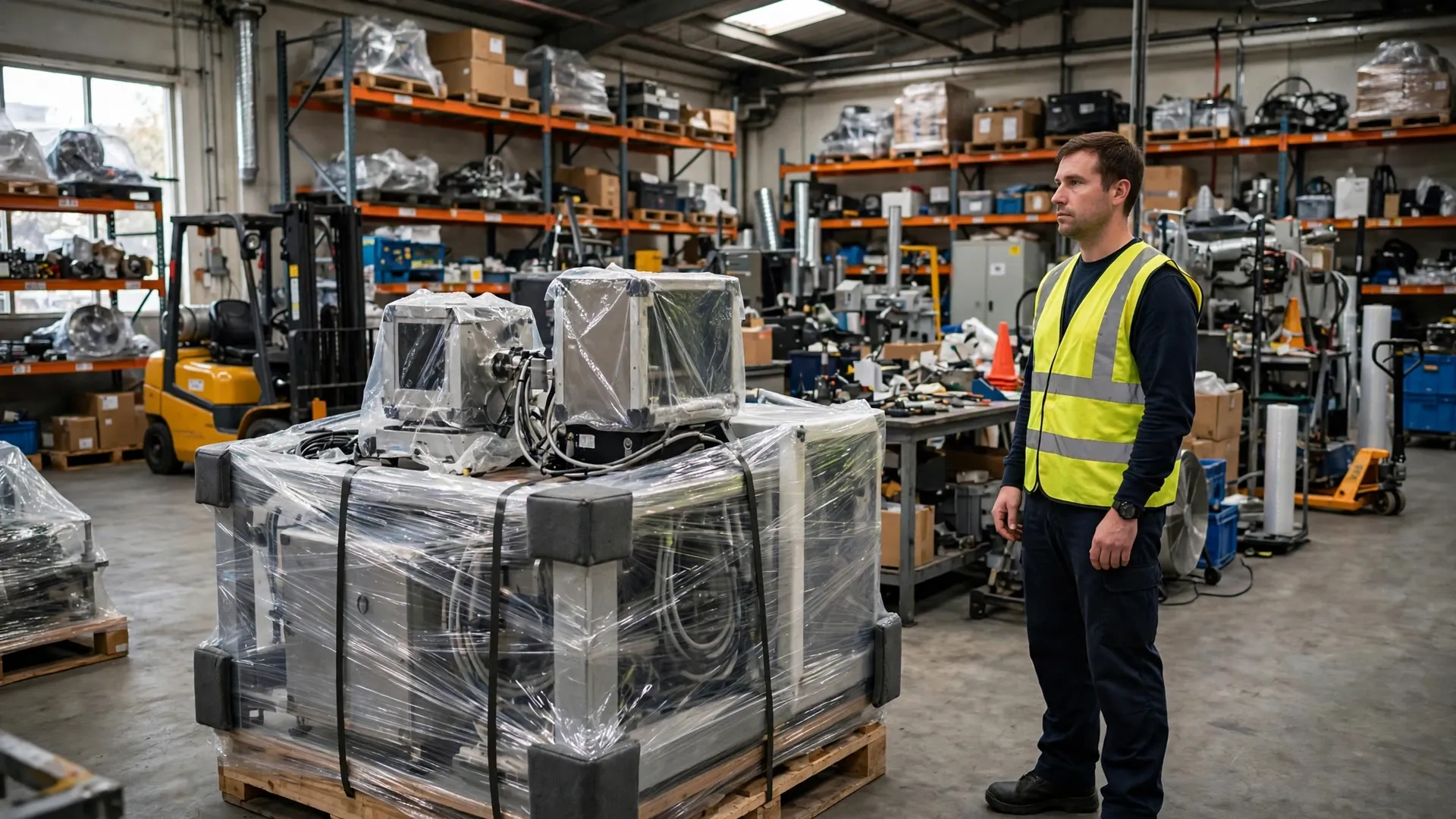
Asset protection security covers high-value equipment and stock through risk assessment plus dedicated guards who watch over equipment and stock in transit or storage. Guards control who enters the site, patrol storage areas, check vehicles and deliveries, and log everything so problems are spotted early. In short, asset protection high-value equipment cover means the gear that keeps your business running is watched by people whose job is to watch it.
The short answer
Asset protection security covers high-value equipment and stock through risk assessment plus dedicated guards who watch over equipment and stock in transit or storage. Guards control who enters the site, patrol storage areas, check vehicles and deliveries, and log everything so problems are spotted early. In short, asset protection high-value equipment cover means the gear that keeps your business running is watched by people whose job is to watch it.
A locked gate on its own does not protect much. Gates get left open, fences get cut, and a yard that nobody checks is an invitation. High-value equipment is worth real money on the second-hand market, and thieves know where it is kept. Asset protection closes that gap with trained officers, clear procedures and written records.
Why high-value equipment is a target
High-value equipment attracts theft for simple reasons. It is valuable, it is often portable, and it is often stored in places that are quiet after hours. Plant, tools, generators, compressors, surveying gear, audio-visual kits, medical devices, copper and cable, and stock held for sale all fall into this group. A single trailer load can be worth more than a month of takings.
Thieves look for patterns: the same compound left unlocked at night, the same stretch of fence nobody checks, the same delivery gate propped open during the day. A worker in a high-visibility vest walking through a yard does not draw attention unless someone is watching the yard.
The loss is rarely just the item. Stolen equipment stops work, crews stand idle while replacements are hired, jobs run late, and insurance claims take time and paperwork. The real cost is the disruption across the whole job, not just the replacement value of the gear.
What asset protection covers
Asset protection is a service built around one idea: your most valuable gear and stock get dedicated attention. It is a plan shaped around what you hold, where you hold it, and when it is most at risk.
The service usually covers:
- Risk assessment — a walk-through of the site to find weak points: fence lines, gates, lighting, storage layout, access points and blind spots.
- Dedicated guards — officers assigned to the equipment and stock, not pulled away to other duties.
- Access control — sign-in for visitors and contractors, vehicle checks, and delivery verification.
- Patrols — scheduled patrols of storage areas, compounds and yards, logged with times and findings.
- Transit watch — supervision of loading, unloading and movement of equipment between sites or to and from storage.
- Reporting — shift reports and incident reports that record what was checked, what was found and what was handed over.
Equipment in storage
Most equipment spends most of its life in storage: a yard, a warehouse, a compound or a locked room. Storage is where protection matters most, because the gear sits still and the site is often empty at night.
A guard on storage duty starts with the perimeter: fence lines walked and checked for cuts, gaps and leaning panels, gates tested, storage containers and lock-ups checked against a list. Anything out of place gets logged and reported the same shift.
Inside the storage area, the work is about order and records. Equipment should be stored where the plan says it is stored. Serial numbers and asset tags should match the register. Keys should be held under a clear system, not left where anyone can find them. A guard who knows the layout spots a missing item fast.
Equipment in transit
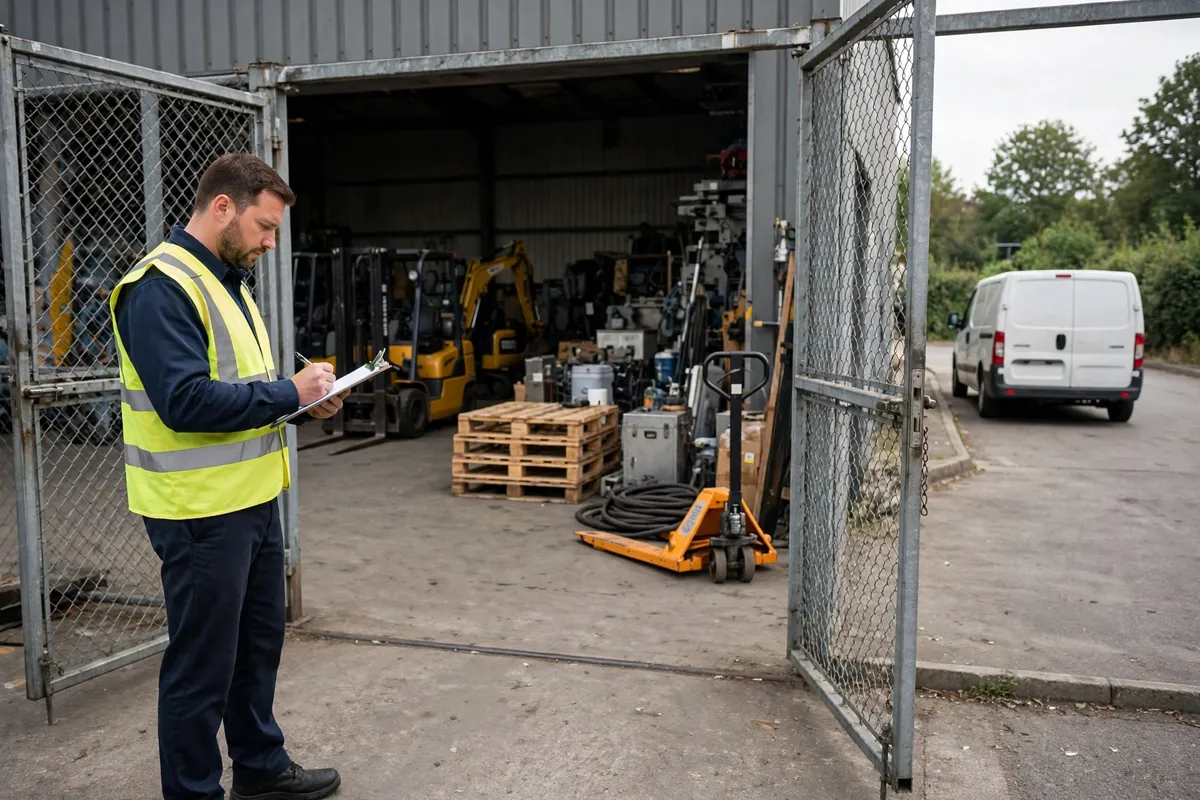
Asset protection for transit starts with the loading plan: who loads, who signs, who checks the load against the list. Guards supervise loading and unloading, verify deliveries against paperwork, and watch the vehicle while it is being loaded.
For moves between sites, the guard keeps the chain of custody unbroken: equipment is signed out at one end and signed in at the other. If something goes missing between two points, the records show exactly where the gap is, which makes follow-up far faster.
The asset protection method
A good asset protection plan follows the same method on every site, adjusted to what is actually there:
- Assess — walk the site, list the high-value items, and find the weak points in fencing, lighting, access and storage.
- Plan — set the guard posts, patrol routes, access rules and reporting format around the risks found in the assessment.
- Brief — brief every officer on the site, the gear, the access rules, the reporting lines and the escalation path before the first shift.
- Guard — staff the posts, run the patrols, control access and watch loading and unloading.
- Report — log every check, patrol, visitor and incident, and hand the records to the client on time.
- Review — revisit the plan when the site changes, the stock changes, or an incident shows a gap.
The review step matters most: sites change, and protection that does not keep up with the site falls behind it.
What officers actually do on shift
An asset protection officer’s shift is built from concrete tasks, not vague presence. A typical shift includes:
- Walking the perimeter and checking fence lines, gates and lighting.
- Checking storage areas against the asset list and noting anything out of place.
- Signing visitors and contractors in and out, and checking vehicles entering and leaving.
- Supervising deliveries, verifying paperwork, and watching loading and unloading.
- Running scheduled patrols of the yard and storage areas, and logging each patrol with time and findings.
- Reporting defects — broken lights, damaged fencing, unsecured gates — the same shift so they get fixed.
Officers work under the observe, record and report model. They do not take physical action against intruders. They watch, they write it down, they escalate, and they hand the record to the client and, where needed, to police. That discipline keeps everyone safe and keeps the record clean enough to use.

Working with your team
Asset protection works best when the guards and your own team share the same information. The site manager should know who is on duty, how to reach them, and what the escalation path is. The guards should know who the site manager is and which areas are off-limits.
Handover between shifts should be written, not verbal. The outgoing officer logs what was checked, what was found and what still needs attention, so nothing falls between shifts and the client can see the full picture at any time.
Reporting is part of the service, not an extra. Ask your provider to show you a sample shift report before you engage them: a good report shows times, locations, checks done, visitors signed in, incidents and handover notes.
A checklist before you engage
Before you engage asset protection, confirm:
- Assessment — who walks the site, and does the plan come from the risks found?
- Dedicated cover — are officers assigned to your equipment and stock, not shared across unrelated duties?
- Access control — sign-in process, vehicle checks, and how unauthorised visitors are handled.
- Transit cover — supervision of loading, unloading and movement between sites.
- Reporting — shift report format, incident report format, and how quickly you receive them.
- Supervision — who supervises the officers, and how often they visit the site.
How JM Security Group can help
JM Security Group provides asset protection in Melbourne: risk assessment plus dedicated guards for equipment and stock in transit or storage. If your gear needs cover, describe what you hold, where it is stored, and when it moves, and ask for a plan built around your site. See Asset Protection for the service detail, Security Guard Services for staffed guarding, Security Mobile Patrols for patrol-only cover, and All Services for the full list. To start, use the quote form, call 03 9716 1160, or email operations@jmsecuritygroup.com.au. Standard bookings are scheduled within 48 hours of confirming the contract, and for emergency call-outs the aim is to respond within 2 hours. JM Security Group operates under Victorian security licence VIC Z70-400-80S.
FAQ
What does asset protection security cover for high-value equipment and stock?
Risk assessment plus dedicated guards who watch over equipment and stock in transit or storage. Guards control access, patrol storage areas, check vehicles and deliveries, and log everything so problems are spotted early.
Is asset protection just a guard at a gate?
No. A guard at a gate is one part of it. Full asset protection adds a risk assessment, a plan built around your gear, patrols, transit watch and written reporting.
What counts as high-value equipment?
Any gear or stock whose loss would stop work or cost serious money to replace: plant, tools, generators, surveying gear, audio-visual kits, medical devices, copper and cable, and stock held for sale.