
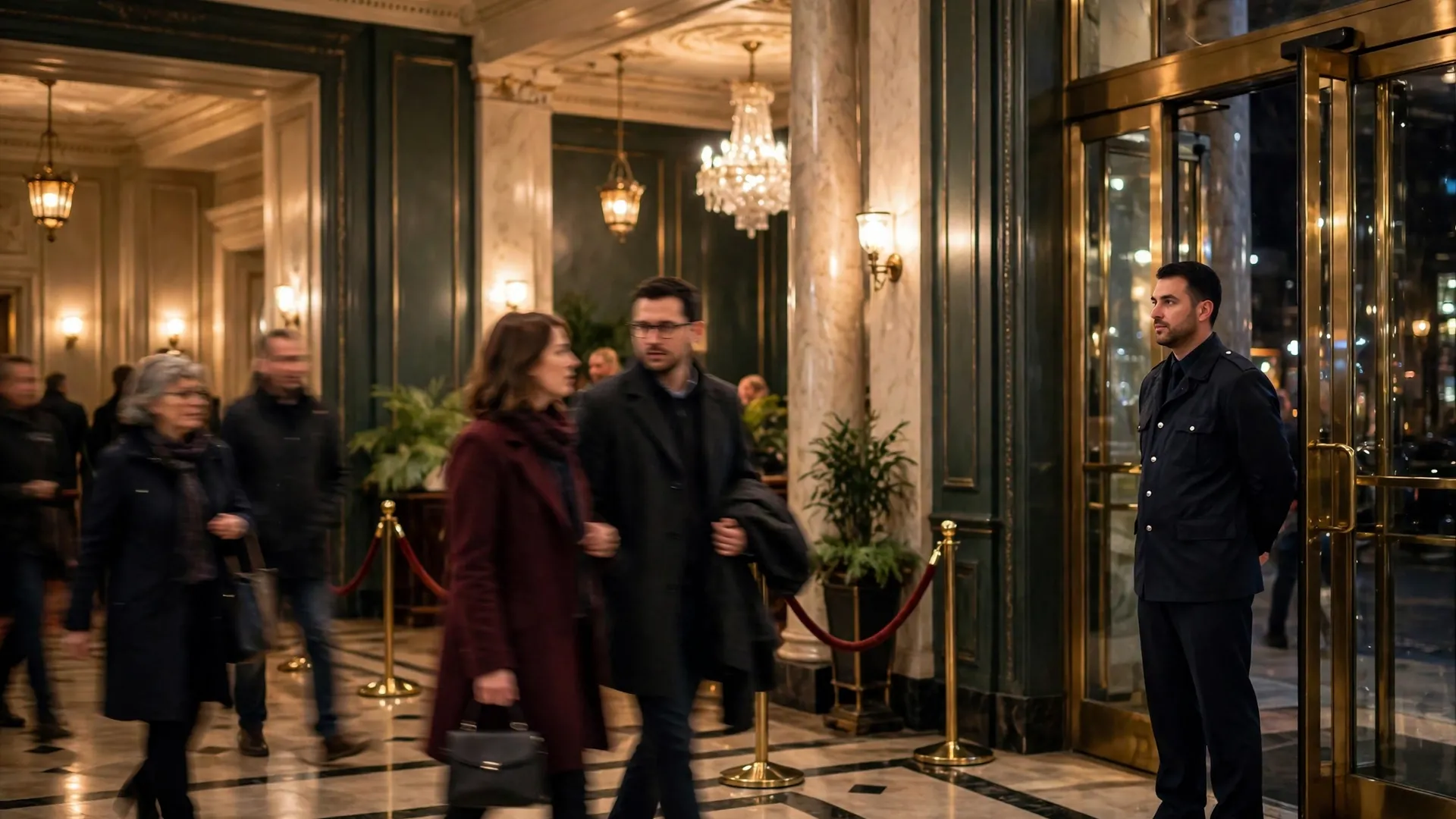
Security at theatres and galleries works through foyer plus backstage control plus crowd watch plus evacuation support that stays discreet. Theatre security guards greet patrons, check tickets and bags where required, guard backstage doors, watch the crowd during the show, and stand ready to guide an evacuation if one is ever needed. The whole point is that the audience enjoys the night and never feels policed.
The short answer
Security at theatres and galleries works through foyer plus backstage control plus crowd watch plus evacuation support that stays discreet. Theatre security guards greet patrons, check tickets and bags where required, guard backstage doors, watch the crowd during the show, and stand ready to guide an evacuation if one is ever needed. The whole point is that the audience enjoys the night and never feels policed.
A theatre is not a warehouse. People come to relax, to celebrate, to be moved by a performance. Security that is loud, heavy-handed or visible at the wrong moment breaks the mood the venue has worked hard to build. The skill of venue security is being present without being the show.
What theatre security guards actually do
Theatre security guards cover four jobs at once: the front door, the backstage, the audience, and the exits. At the front door they welcome patrons, check tickets, manage queues and watch for anyone who is heavily intoxicated or likely to cause trouble. Backstage they guard dressing rooms, props, instruments and set pieces, and make sure only authorised people pass the stage door. During the show they watch the crowd quietly from the aisles and the rear. After the show they manage the flow out, keep the foyer clear, and lock down backstage.
None of this involves confrontation by default. Most of the work is calm conversation: directions, reminders, a quiet word with someone who is filming when they should not be, a hand offered to a patron who needs help. Guards de-escalate early so small problems never become big ones. If someone must be asked to leave, it is done quietly, away from the crowd, with a supervisor involved.
Guards also handle the practical details that keep a night on track: lost property, a patron who feels unwell, a latecomer who needs seating without disturbing the performance, a child who has wandered from their group. These moments are where venue security earns its keep.
The venue method: four parts
1. Foyer control
The foyer is where the night is set. Guards manage the entry queue, check tickets, and watch the flow so the doors never clog. Where the venue requires it, they check bags for prohibited items: glass, outside food and drink, professional cameras, anything that could disturb the show. Bag checks are done politely, with the patron’s belongings respected and returned quickly.
Foyer control also means watching for trouble before it enters. A group that has been drinking heavily, a patron arguing at the ticket desk, a person trying to enter without a ticket — all of these are easier to handle at the door than in the auditorium.
2. Backstage control
Backstage is a working area, and it holds people and property that need protection. Performers, instruments, costumes, props, set pieces and personal belongings are all behind the stage door. Backstage control means one clear entry point, a list of who is authorised, and a guard or supervisor who checks it.
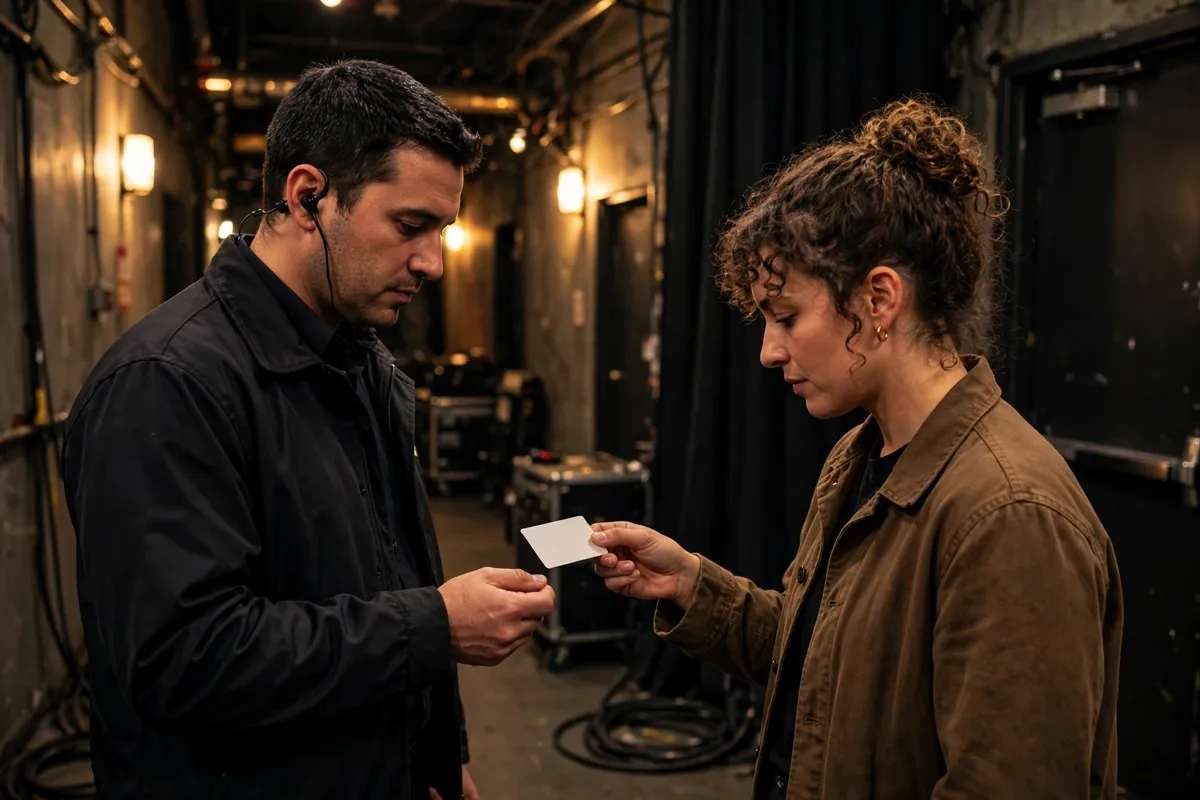
Performers need to feel safe in their workplace. Dressing rooms stay private. Visitors go through the stage door, not around the back. Deliveries are checked and signed for. When the show ends, backstage locks down again so nothing walks out with the crowd.
3. Crowd watch
During the performance, guards watch the crowd from positions that do not block anyone’s view: the rear, the aisles, the side doors. They watch for patrons who are unwell, for phones and cameras in use, and for people standing where they should not stand.
Crowd watch is quiet work. Guards do not patrol up and down the aisles during a performance. They stand where they can see, move when they need to, and stay out of the audience’s experience.
4. Evacuation support
Every venue needs a plan for the night something goes wrong: a fire alarm, a medical emergency, a threat that forces the building to clear. Guards know the evacuation routes, the assembly point, and who gives the order. They open the exit doors, guide patrons out in an orderly way, keep the exits clear, and account for people at the assembly point.
Evacuation support is rehearsed, not improvised. Guards walk the routes before the season or the event, check that exit doors open freely, and confirm that exit signs and lighting are working.
The audience experience comes first
Venue security is judged by the audience, and the audience judges it by feel. A guard who greets people, gives directions with a smile, and handles a problem quietly makes the venue feel safe. A guard who glares, blocks doorways or argues with patrons makes the venue feel tense, even if nothing bad happens.
That is why presentation matters. Venue guards dress to match the venue: neat, professional, suited to the occasion. They speak plainly and politely. They know the layout: where the toilets are, where the bar is, which door leads to the car park. A guard who can answer a patron’s question is a guard who is doing the job.
Galleries, exhibitions and open nights
Galleries and exhibitions bring a different set of needs. The art itself is the asset, and it is often irreplaceable. Gallery security means watching the rooms without standing over the visitors, keeping a clear distance between hands and artworks, and knowing the rules for each space: which rooms allow photography, which works must not be touched, where the alarms are.
Opening nights are the busiest test. A gallery that normally hosts fifty visitors may host five hundred on opening night. Guards manage the door count, keep the flow moving, watch the works, and make sure the bar area and the exhibition space do not crowd each other. The same four-part method applies — foyer, backstage, crowd watch, evacuation support — fitted to the gallery’s layout.
Stadiums and outdoor venues scale the same method up: bigger crowds, more gates, more exits, and a bigger team. The principle stays the same — the crowd enjoys the event, and security stays discreet until it is needed.

When something goes wrong
When an incident happens, venue guards follow the same discipline as every other security service: observe, record and report. They do not take physical action against members of the public. They calm the situation, separate people where needed, call a supervisor, and contact police or ambulance where the situation calls for it.
After the incident, the report matters. What happened, when, where, who was involved, what the guard did, and what was handed over. A clear incident report protects the venue and helps the venue manager fix the cause so it does not happen again.
A checklist for venue managers
Before you engage venue security, confirm:
- Foyer — entry flow, ticket checks, bag checks where required, and how intoxicated patrons are handled.
- Backstage — stage-door control, authorised lists, dressing-room privacy, and delivery checks.
- Crowd watch — guard positions during the show, and how latecomers and unwell patrons are handled.
- Evacuation — routes walked, exits checked, assembly point confirmed, and who gives the order.
- Presentation — dress standard, tone, and knowledge of the venue layout.
- Reporting — incident report format, and how quickly you receive reports after the event.
How JM Security Group can help
JM Security Group provides arts, entertainment and recreation security in Melbourne: foyer plus backstage control plus crowd watch plus evacuation support that stays discreet. If your venue needs cover for a season, a run of shows, or a single opening night, describe the venue, the audience and the dates, and ask for a plan built around your foyer, your backstage and your exits. See Arts Entertainment & Recreation Security for the service detail, Event Security Guards for event cover, Crowd Controllers for crowd management, and All Services for the full list. To start, use the quote form, call 03 9716 1160, or email operations@jmsecuritygroup.com.au. Standard bookings are scheduled within 48 hours of confirming the contract, and for emergency call-outs the aim is to respond within 2 hours. JM Security Group operates under Victorian security licence VIC Z70-400-80S.
FAQ
How does security work at theatres and galleries without disrupting the experience?
Through foyer plus backstage control plus crowd watch plus evacuation support that stays discreet. Guards greet patrons, guard backstage doors, watch the crowd quietly during the show, and stand ready to guide an evacuation if one is ever needed.
Do theatre security guards check bags?
Where the venue requires it, yes. Bag checks are done politely, with belongings respected and returned quickly, and the aim is to keep prohibited items out without holding up the queue.
What happens if a patron causes trouble during a show?
Guards handle it quietly, away from the crowd, with a supervisor involved. The approach is calm conversation and de-escalation first, and the incident is logged in a written report.