
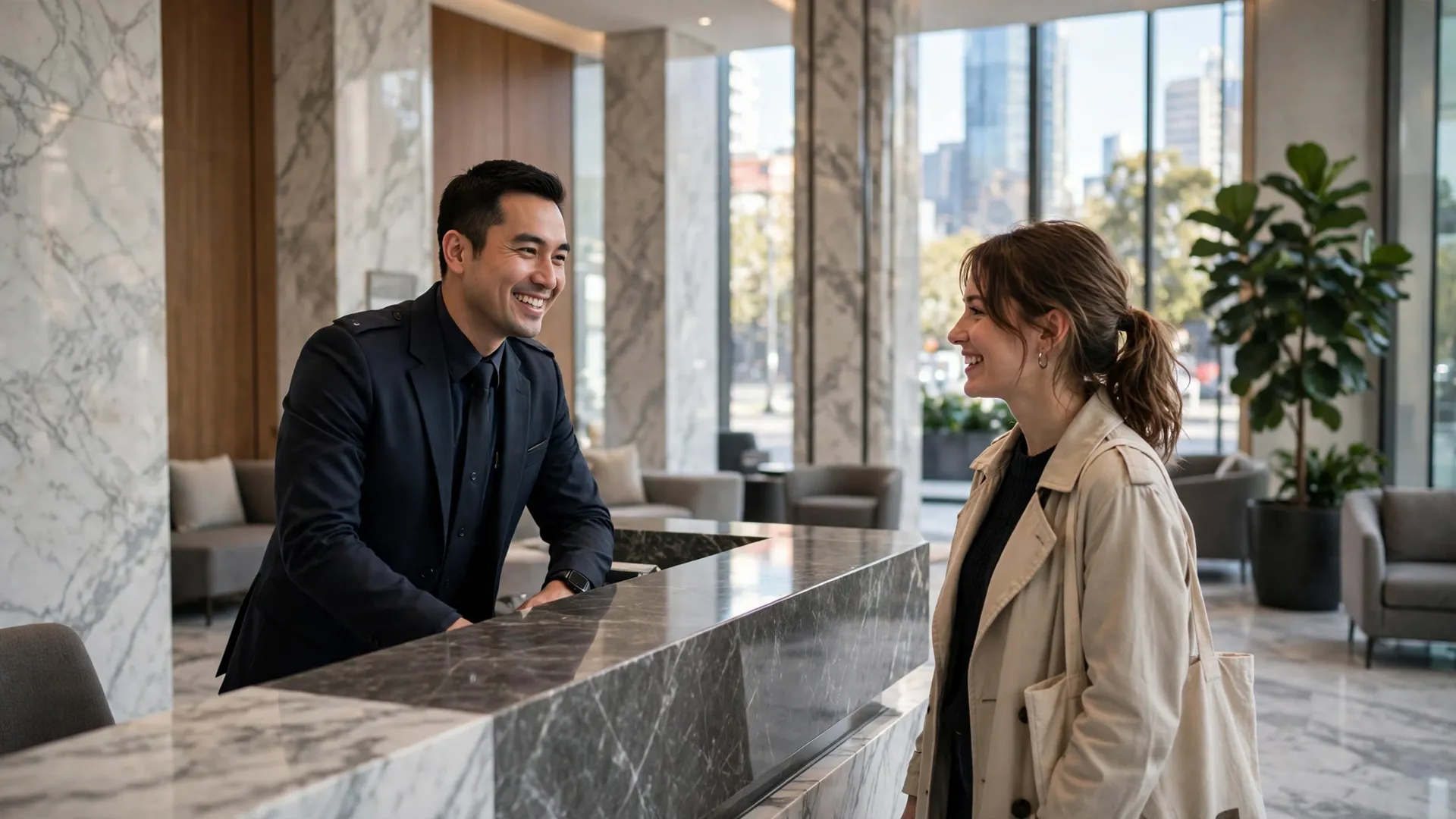
What does a concierge security officer do? They are the first person you meet in the building: a welcoming front-of-house presence who manages visitors, controls access, keeps the lobby running smoothly, and responds when something goes wrong. Concierge security officer duties blend hospitality with security, and the officer who does both well makes the whole building feel calm, professional and safe.
The short answer
What does a concierge security officer do? They are the first person you meet in the building: a welcoming front-of-house presence who manages visitors, controls access, keeps the lobby running smoothly, and responds when something goes wrong. Concierge security officer duties blend hospitality with security, and the officer who does both well makes the whole building feel calm, professional and safe.
Walk into a well-run office tower or residential building in Melbourne and the lobby tells you something before anyone speaks. The desk is staffed. Someone looks up, greets you, and asks how they can help. That person is often a concierge security officer. They are not a receptionist who happens to wear a uniform, and they are not a guard who happens to sit at a desk. They are a trained officer doing a front-of-house job where people skills matter as much as security skills.
The lobby is the building’s front door
First impressions are set in the lobby. A visitor who is greeted warmly and directed clearly starts their meeting relaxed. A resident who comes home to a staffed, well-kept lobby feels their building is looked after. A delivery driver who is signed in quickly gets on with their run.
A lobby with no one at the desk sends the opposite message. Visitors wander, deliveries pile up, strangers walk in unchallenged, and small problems sit until they grow. The concierge officer prevents all of that by being present, attentive and approachable.
Concierge security officer duties: the four parts
1. Welcoming front-of-house presence
The first duty is the one visitors notice most: a warm, professional welcome. The officer greets people as they arrive, answers questions about the building, gives directions, and helps with the small things that make a visit smooth — holding a door, calling a lift, pointing a courier to the right floor.
This is not window dressing. A friendly officer builds trust, and trust is what makes security work in a front-of-house setting. A visitor who trusts the officer tells them when something looks wrong. A resident who knows the officer by name reports a broken lock instead of ignoring it.
2. Visitor management
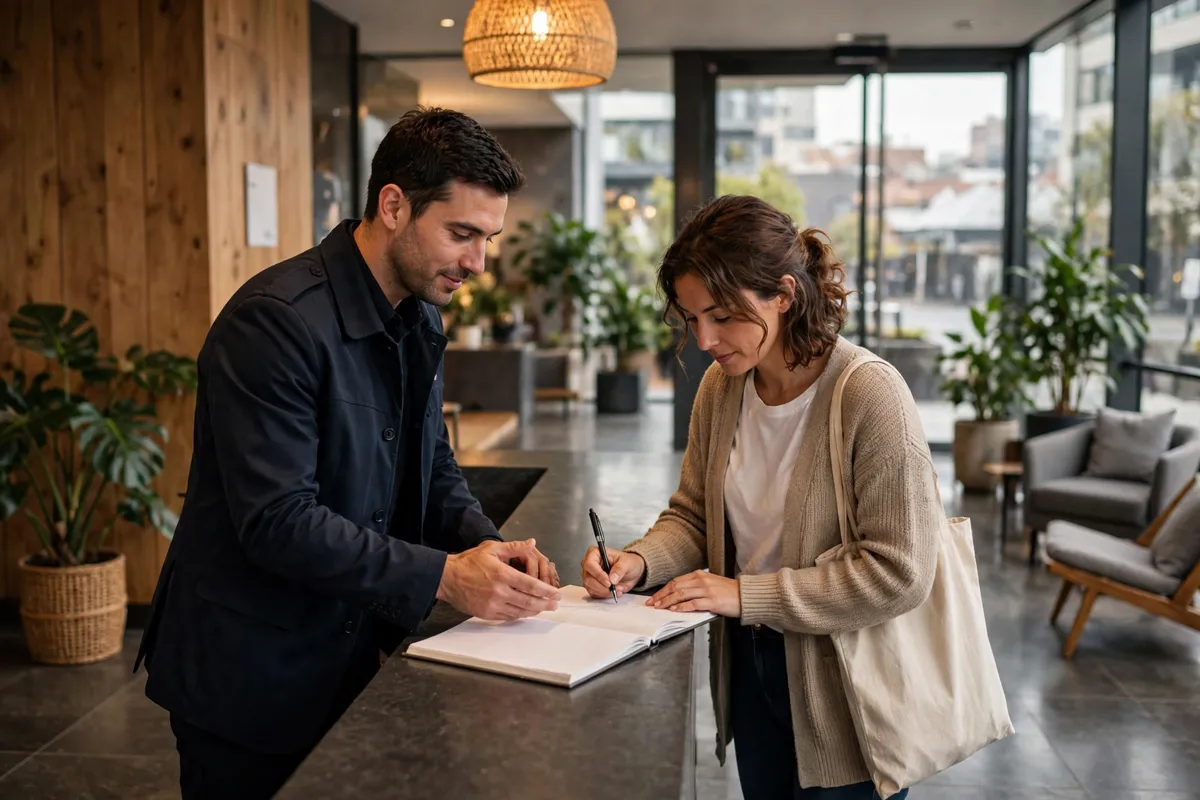
Visitor management is the core security duty at the desk. The officer signs visitors in, checks identification, issues a visitor pass, and contacts the tenant or resident the visitor has come to see. The visitor waits in the lobby until they are collected or confirmed. Nobody wanders the floors unannounced.
The sign-in record matters. It shows who was in the building and when, which the building team needs for safety and for incident follow-up. If a fire alarm sounds, the sign-in log tells the officer who is in the building. If an incident happens on a floor, the log shows who was signed in at the time. A lobby with no visitor record has no answers when it needs them.
Visitor management also covers the people who arrive without an appointment: sales callers, job seekers, delivery drivers, tradespeople. The officer handles each one by the building’s rules — signing them in, calling the tenant, or politely turning them away when they have no business in the building. The rule is the same every time, applied to everyone, so nobody can argue they were singled out.
3. Access control
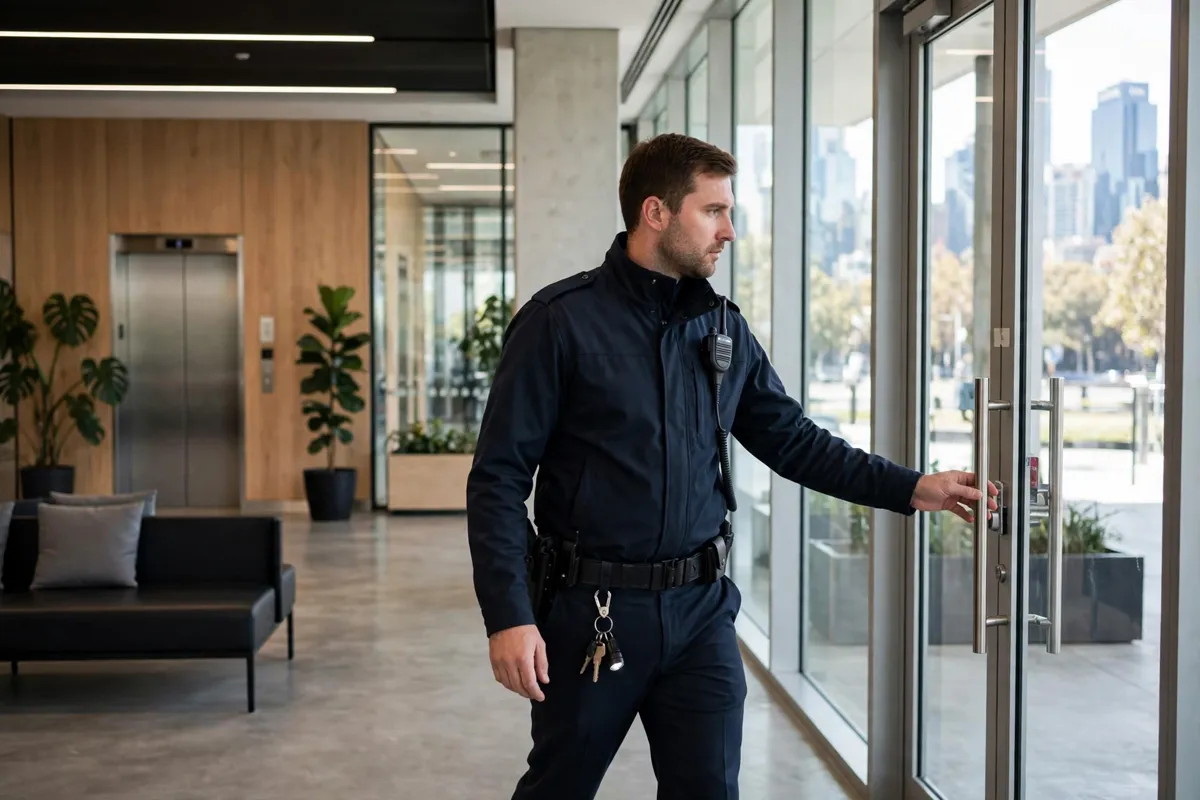
Access control in a lobby means making sure only authorised people get past the desk. The officer manages keys, fobs and access cards, issues temporary passes to approved visitors, and watches the entry points so nobody slips through behind someone else. They keep the back-of-house doors, plant rooms and service corridors shut and checked.
Access control also means knowing the building’s rhythms. The officer knows when the cleaners arrive, when the gym opens, when the car park gate gets busy, and which tenants work late. That familiarity lets them spot what does not fit: a stranger in a service corridor, a door propped open, a person following a resident through the entry. They challenge it politely and promptly, and they log what happened.
In residential towers, access control extends to resident safety. The officer watches for people waiting near the entry to follow a resident in, manages deliveries so parcels do not pile up in the foyer, and keeps the car park entry under observation.
4. Incident response
When something goes wrong, the lobby officer is the first responder. A water leak in the foyer, a fire alarm, a medical emergency, an aggressive visitor, a power outage — the officer is the person on the spot. They follow the building’s procedures, call the right people, and keep the situation calm while help arrives.
Incident response in a lobby is mostly about composure and communication. The officer reassures the people nearby, keeps the area clear, calls emergency services when needed, and logs what happened with times and names. They observe, record and report. They do not put themselves or others at risk trying to fix a problem that belongs to the fire brigade or the police.
After the incident, the officer writes it up: what happened, when, who was involved, what was done, and what was handed over. That report goes to the building manager the same shift. Good incident reports protect the building, the tenants and the officer, because the record is clear while memories are still fresh.
Lobby patrols and the quiet hours
Concierge work is not all desk time. Officers walk the lobby and common areas on a schedule: the foyer, the lifts, the stairwells, the car park entry, the loading dock, the mailroom. They check that doors are shut, that nothing is blocked, and that no one is where they should not be. Patrols are logged at scheduled stops along the route, so the building team can see the coverage.
The quiet hours matter too. Early mornings, late evenings and weekends are when a building is at its most vulnerable, because fewer people are around to notice a problem. A lobby officer on a quiet shift keeps the same standard: the desk staffed, the doors checked, the log kept.
What makes a good lobby officer
The best lobby officers share a few traits. They are alert without looking tense. They are friendly without being familiar. They remember faces and names, and they notice when something is off. They write clear reports. They show up on time, in a clean uniform, and they treat the lobby as their own front room.
Building managers should brief officers properly: the tenant list, the house rules, the sign-in process, the access card procedure, the emergency contacts, and the incident reporting format. An officer who knows the building’s rules can enforce them confidently. An officer who has never been briefed is guessing, and guests can tell.
A checklist for building managers
Before you engage concierge security, confirm:
- Welcome — warm, professional front-of-house presence, lobby kept presentable.
- Visitors — sign-in process, ID checks, passes, and a complete visitor log.
- Access — keys, fobs and cards managed, entry points watched, service areas shut.
- Patrols — lobby and common areas walked on schedule, stops logged.
- Incidents — calm first response, emergency calls, same-shift written report.
- Briefing — tenant list, house rules, emergency contacts, reporting format.
How JM Security Group can help
JM Security Group provides Concierge Security in Melbourne: lobby officers who welcome visitors, manage sign-in and access, patrol the common areas, and respond calmly when something goes wrong. If your building needs front-of-house cover, describe the building, the hours and the lobby setup, and ask for a plan built around your desk, your visitors and your reporting needs. See Concierge Security for the service detail, Security Guard Services for general guard cover, and All Services for the full list. To start, use the quote form, call 03 9716 1160, or email operations@jmsecuritygroup.com.au. Standard bookings are scheduled within 48 hours of confirming the contract, and for emergency call-outs the aim is to respond within 2 hours. JM Security Group operates under Victorian security licence VIC Z70-400-80S.
FAQ
What does a concierge security officer do?
They are the building’s front-of-house presence: welcoming visitors, managing sign-in, controlling access, patrolling common areas, and responding calmly when something goes wrong.
Is a concierge officer the same as a receptionist?
No. A concierge security officer is a trained officer doing a front-of-house job. They handle visitor management, access control, patrols and incident response alongside the welcome.
How does a lobby officer handle visitors?
They sign visitors in, check identification, issue a visitor pass, contact the tenant or resident, and keep the visitor in the lobby until collected or confirmed.
What happens if there is an incident in the lobby?
The officer follows the building’s procedures, reassures people nearby, calls emergency services when needed, and writes up a same-shift report with times, names and handover notes.