
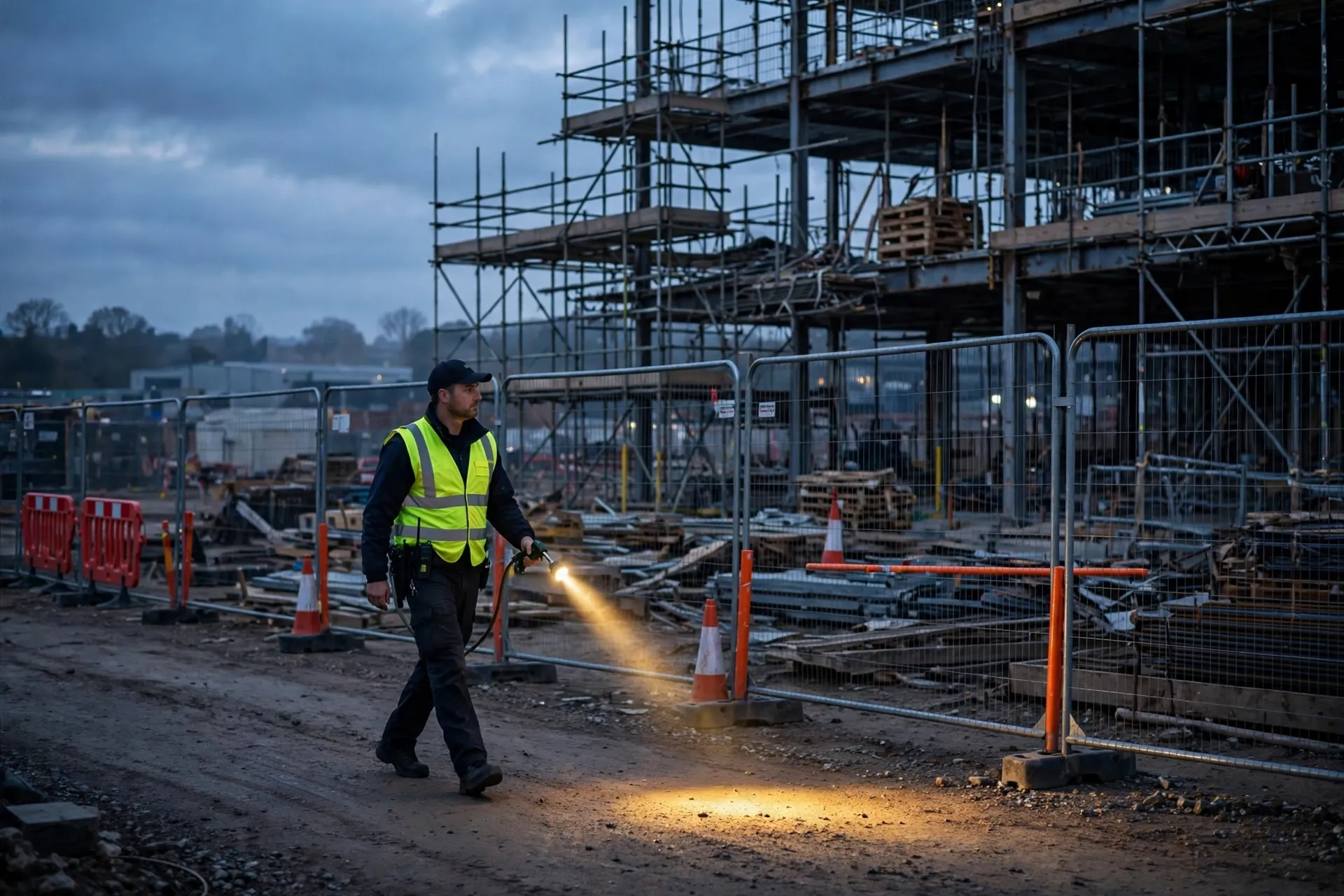
Construction site security stops tool theft and vandalism through a combination of perimeter checks, a staffed gatehouse, after-hours patrols and written reporting. Guards check fence lines, sign contractors in and out, patrol the site at night, watch over tools, plant and materials, and log everything so the site team can act on it. No single measure does the job alone — it is the combination, applied every shift, that makes a site a hard target.
The short answer
Construction site security stops tool theft and vandalism through a combination of perimeter checks, a staffed gatehouse, after-hours patrols and written reporting. Guards check fence lines, sign contractors in and out, patrol the site at night, watch over tools, plant and materials, and log everything so the site team can act on it. No single measure does the job alone — it is the combination, applied every shift, that makes a site a hard target.
An unguarded construction site is an easy target. Tools, plant and materials are valuable, portable and often stored in the open. A site that is empty at night, with a fence that nobody checks and a gate that nobody watches, invites theft. Builders usually discover the cost afterwards: delayed work, replacement hire, insurance paperwork and a programme that slips. Prevention avoids the delays and disruption that follow a theft, and it starts with making the site visibly watched.
Why construction sites are targeted
Construction sites attract theft for practical reasons. The site holds high-value items — power tools, copper, plant attachments, fuel and materials — in a place that is often quiet after hours. The perimeter is temporary fencing that can be cut or climbed. The workforce changes daily, so a stranger on site does not always stand out. And the site is dark at night, when most theft happens.
The thieves are not always opportunists. Some know what is on site, where it is stored and when the site is empty. They look for patterns: the same compound left unlocked, the same stretch of fence never checked, the same night with no patrol. Breaking the pattern is the whole point of site security. A site that is checked, logged and watched is a site that thieves pass by.
Vandalism is the other cost. It is not always about stealing. Damage to fencing, plant, signage and partially finished work causes delays even when nothing is taken. A guard who finds damage early, logs it and reports it gives the site team a chance to repair and secure before the next night.
The construction security method: four layers
1. Perimeter checks
The fence is the first line of defence, and it only works if someone checks it. Guards walk the fence line and look for cuts, gaps, leaning panels and unsecured gates. They check that the compound is locked, that materials are stored where they should be, and that nothing has been staged near the fence for later collection.
Perimeter checks happen on a route, and the route is logged. If a section of fence is weak, it gets reported the same shift so the site team can fix it. A fence that is checked every shift stays a fence. A fence that is never checked becomes a gap.
2. The gatehouse
The gatehouse is where the site knows who is on it. Guards sign contractors in and out, check vehicles entering and leaving, and turn away anyone who has no business on site. The sign-in log is a record of who was on site and when — useful for safety, for incident follow-up and for settling disputes about what was delivered or removed.
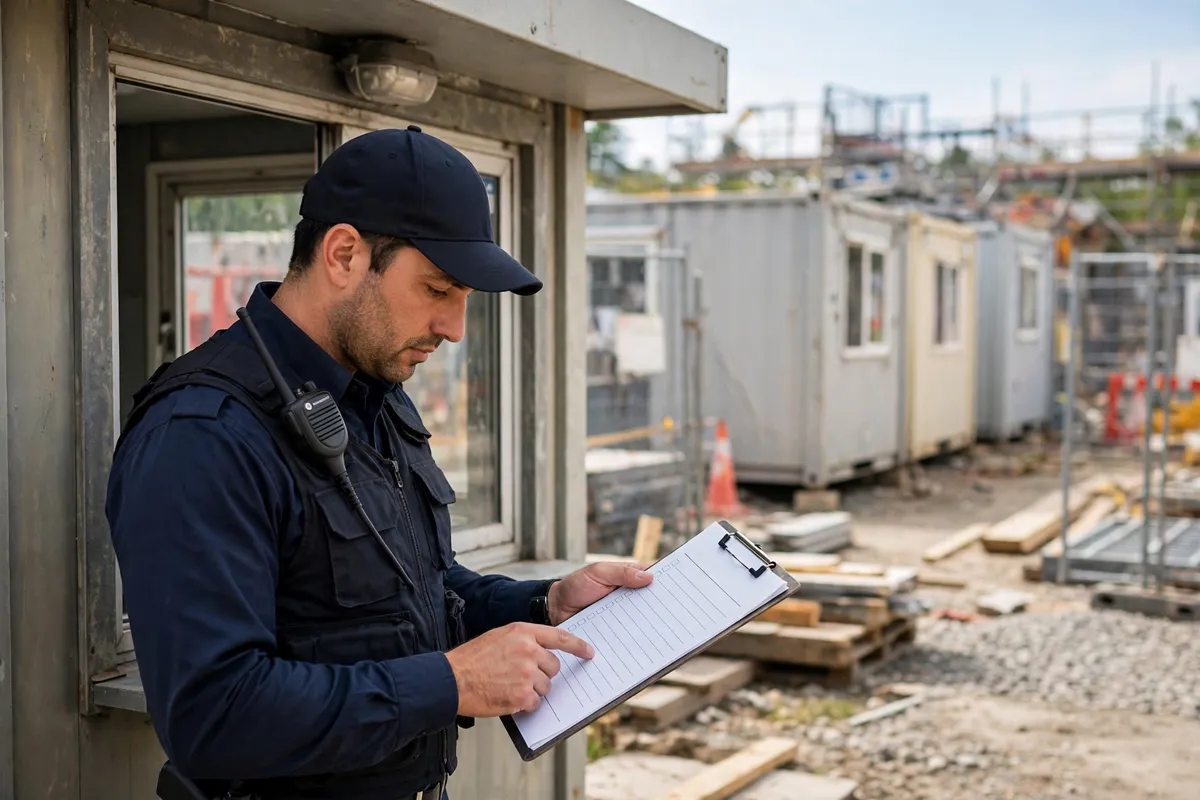
A staffed gatehouse also sets the tone for the site. Contractors who sign in, show identification and follow the induction rules behave differently from visitors who walk in unchallenged. The gatehouse is where the site’s rules become real.
3. After-hours patrols
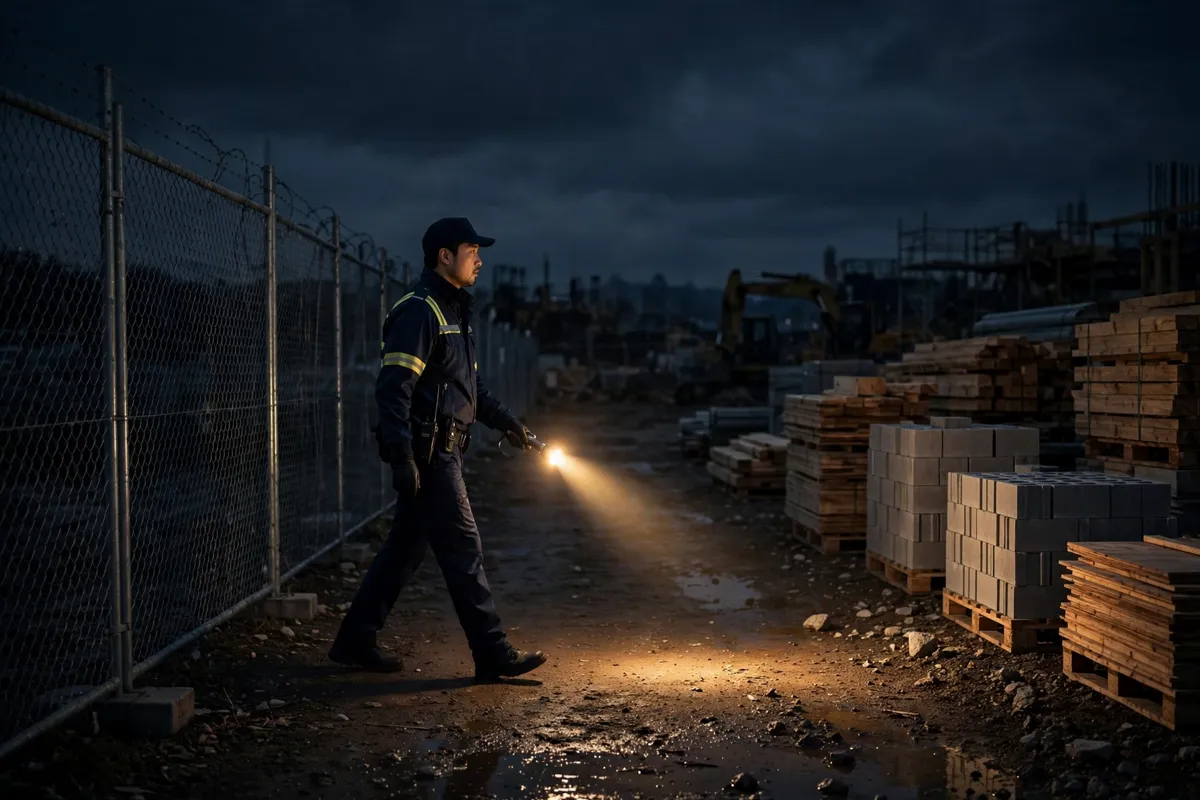
Most site theft happens when the site is empty, so after-hours patrols are the core of construction security. Patrols check the compound, the plant yard, the materials storage and the site offices. They look for open doors, running equipment, water leaks, fire risks and anyone who should not be there.
Patrols work best when their timing is not predictable. A patrol that arrives at the same time every night can be watched and avoided. Patrols that vary their timing and route make the site harder to target. Each patrol is logged with the time, the route and what was found, so the site team can see the coverage the next morning.
4. Reporting the site team can use
Reporting is what turns guarding into site security. A shift report should record the checks done, the patrols completed, the visitors signed in, any incidents, and anything that needs the site team’s attention. Incident reports should record the time, the location, what was observed, what the guard did, and what was handed over.
Good reporting helps the builder in practical ways. It supports insurance claims with dated records. It shows the principal contractor that security is being delivered. And it feeds the toolbox talk: the site team can hear what happened overnight and adjust the next day’s work. Ask your provider to show you a sample shift report before you engage them. If the report is thin, the service will be thin.
Working with site safety rules
Security on a construction site must fit the site’s safety rules, not fight them. Guards work within the site’s HSE rules, follow the SWMS for the work being done, and complete the site induction like every other worker on site. They wear the site’s required PPE, follow the traffic rules on site, and respect exclusion zones.
This is why briefing matters. A guard who has completed the site induction knows where the hazards are, where the muster point is, and who the site manager is. A guard who has not been inducted is a safety risk, not a safety measure. Confirm before the first shift that induction is part of the arrangement.
Static guards, patrols, or both?
Some sites need a guard at the gate all day. Some need patrols at night only. Many need both: a gatehouse during working hours and patrols after hours. The right mix depends on the site stage, the value on site, the perimeter quality and the local risk.
Early earthworks with little on site may need patrols only. Fit-out stage, with tools and materials across the building, usually needs a staffed gatehouse plus night patrols. A site with repeated incidents needs the coverage increased, not just continued. Ask your provider to review the mix as the site changes stage. Security that does not adapt to the build is security that falls behind it.
A checklist for builders
Before you engage site security, confirm:
- Perimeter — who checks the fence, how often, and how defects are reported.
- Gatehouse — sign-in process, vehicle checks, and how unauthorised visitors are handled.
- Patrols — after-hours coverage, route logging, and how patrol timing varies.
- Reporting — shift report format, incident report format, and how quickly you receive them.
- Induction — site induction for every guard before the first shift.
- Supervision — who supervises the guards, and how often they visit the site.
How JM Security Group can help
JM Security Group provides construction site security in Melbourne: guards and after-hours patrols that stop tool theft, vandalism and unauthorised access on building sites. If your site needs cover, describe the project stage, the hours and what is stored on site, and ask for a plan built around your perimeter, your gatehouse and your reporting needs. See Construction Site Security for the service detail, Security Mobile Patrols for patrol-only cover, and All Services for the full list. To start, use the quote form, call 03 9716 1160, or email operations@jmsecuritygroup.com.au. Standard bookings are scheduled within 48 hours of confirming the contract, and for emergency call-outs the aim is to respond within 2 hours. JM Security Group operates under Victorian security licence VIC Z70-400-80S.
FAQ
Q: How does construction site security stop tool theft and vandalism?
A: Through perimeter checks, a staffed gatehouse, after-hours patrols and written reporting. Guards check fence lines, sign contractors in and out, patrol at night, watch over tools, plant and materials, and log everything for the site team.
Q: Do construction sites need guards or patrols?
A: It depends on the site stage and what is stored on site. Many sites need both: a gatehouse during working hours and patrols after hours. Ask your provider to review the mix as the site changes stage.
Q: What should a construction shift report include?
A: Checks done, patrols completed, visitors signed in, any incidents, and anything needing the site team’s attention — with times, locations and handover notes.
Q: Do guards complete the site induction?
A: Yes. Guards should complete the site induction, follow the site HSE rules and SWMS, and wear the site’s required PPE before the first shift.