
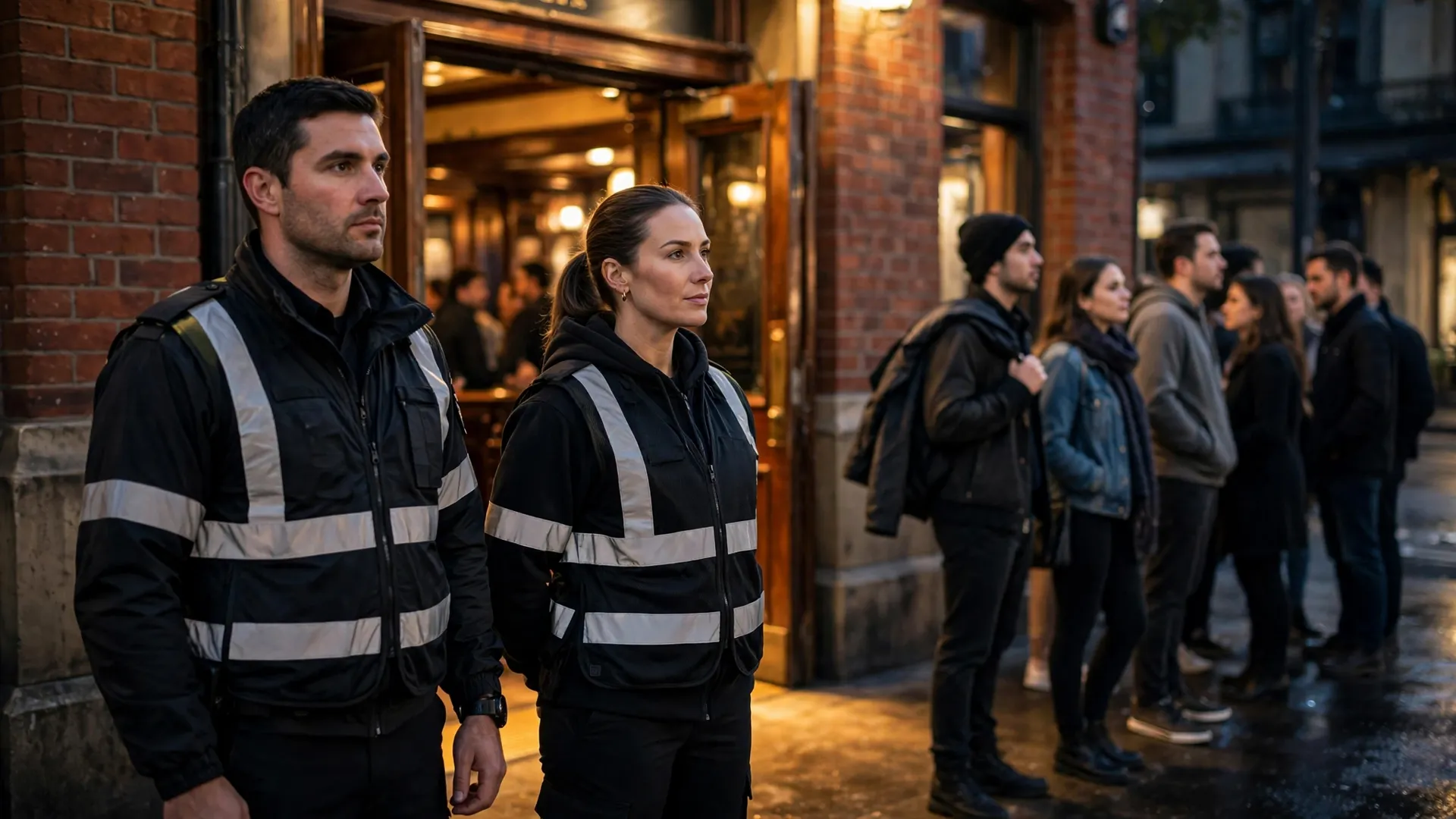
What do crowd controllers do at pubs and clubs in Melbourne? They check ID at the door, screen who comes in, watch behaviour inside the venue, calm trouble early, keep exits clear, and log what happened. Crowd control at Melbourne pubs and clubs is not about standing at the door looking tough. It is a licensed role with clear duties, and venues that get it right see fewer incidents, smoother entries and safer closing times.
The short answer
What do crowd controllers do at pubs and clubs in Melbourne? They check ID at the door, screen who comes in, watch behaviour inside the venue, calm trouble early, keep exits clear, and log what happened. Crowd control at Melbourne pubs and clubs is not about standing at the door looking tough. It is a licensed role with clear duties, and venues that get it right see fewer incidents, smoother entries and safer closing times.
A pub or club on a busy night is a fast-moving place. People arrive in groups, the bar fills up, the music gets louder, and small problems can grow quickly. Crowd controllers are there to keep that night on track. They set the tone at the door, they notice trouble before it spreads, and they deal with it calmly so the rest of the room can enjoy the night.
Why pubs and clubs need crowd control
Licensed venues bring together alcohol, crowds, noise and late hours. That mix is enjoyable for most people and risky for a few. Someone who has had too much to drink may pick a fight. A group may try to push past the door. A patron who has been refused entry may come back and try again. Staff behind the bar cannot watch all of that and serve at the same time.
Crowd controllers fill that gap. They watch the door so bar staff can work the bar. They watch the room so managers can run the venue. And they give patrons a visible point of contact when something feels wrong. A patron who feels unsafe tells the nearest controller, not the bartender who is three deep in orders.
What crowd control at Melbourne pubs and clubs covers
The work breaks down into four duties. Each one matters on its own, and together they cover the night from doors-open to close.
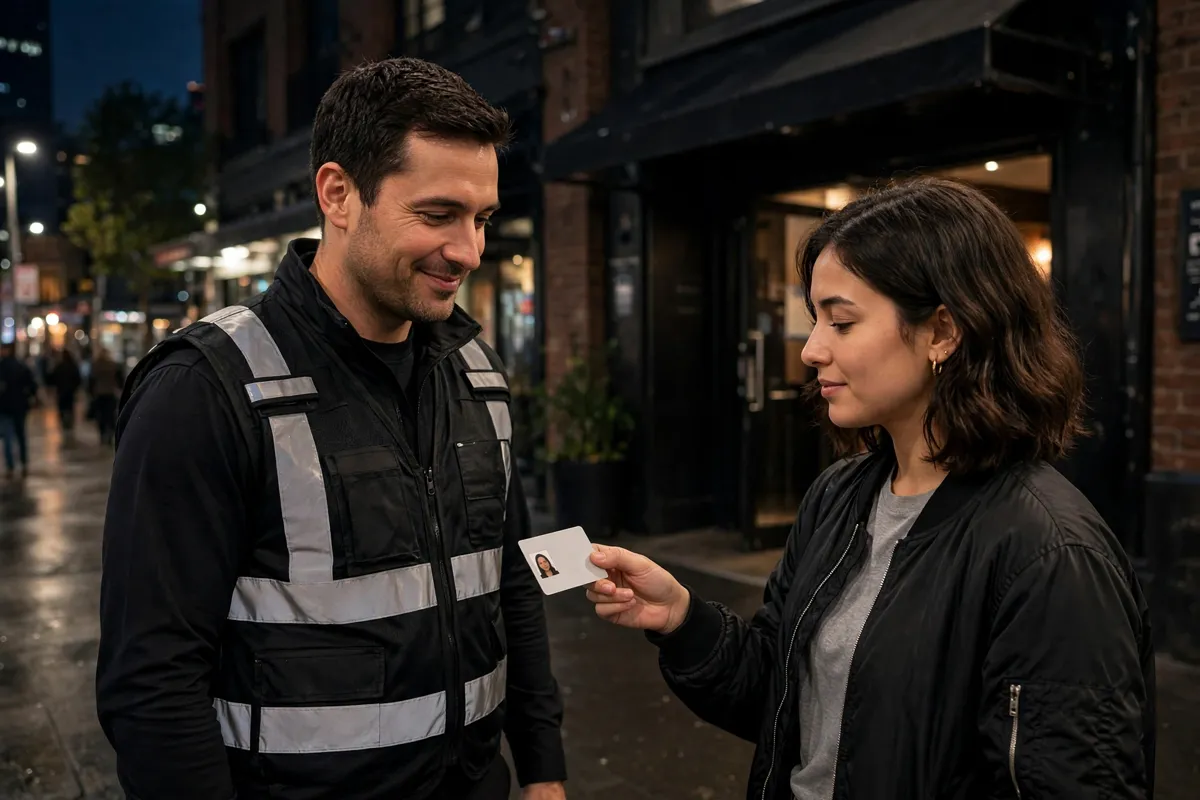
1. ID checks and entry screening
ID checks are the first duty and the most visible. Controllers check photo ID to confirm age and identity, and they refuse entry to anyone who cannot prove they are old enough to enter. They also look for fake ID, for ID that belongs to someone else, and for patrons who are already intoxicated before they walk in.
Entry screening goes further than ID. Controllers watch for banned items, for patrons carrying glass or weapons, and for anyone who arrives looking for a fight. They manage the queue so it stays orderly and does not spill onto the footpath. They turn away people who are refused entry, and they do it firmly and politely, without a scene.
Good entry screening is calm and consistent. The same rules apply to everyone, every time. Patrons notice when the door is run fairly, and that fairness sets the tone for the whole night. A door run on favourites and moods invites arguments. A door run on clear rules does not.
2. Behaviour monitoring
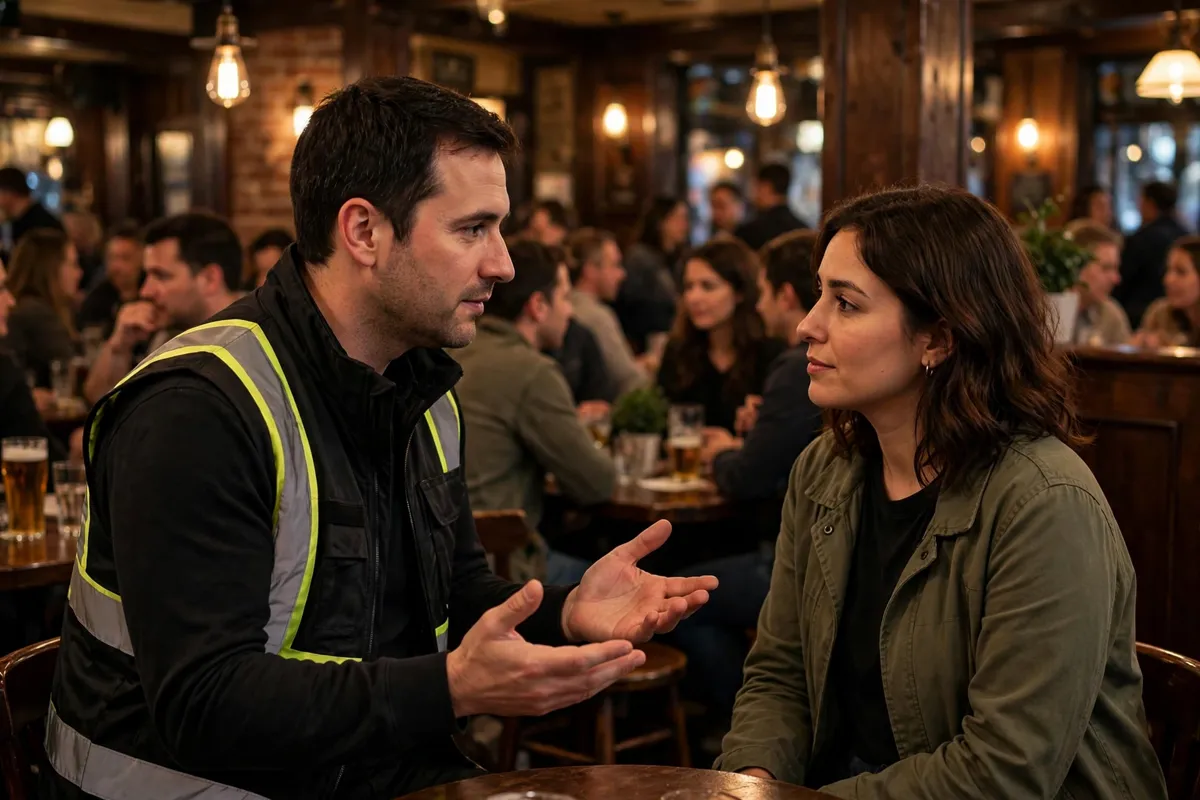
Once patrons are inside, controllers watch the room. They look for the early signs of trouble: raised voices, pushing, a group gathering around one person, a patron who is drinking too fast, or someone who keeps approaching strangers after being brushed off. The aim is to spot a problem while it is still small.
Behaviour monitoring is active work. Controllers move through the venue rather than standing in one corner. They check the bar area, the dance floor, the smoking area, the toilets corridor and the outdoor area. They keep an eye on crowd density and on bottlenecks where people bunch up. They note who is in the venue and how the mood is shifting as the night goes on.
This is where experience shows. A new controller watches for fights. An experienced controller watches for the five minutes before a fight, and steps in while a quiet word still works. That early step-in is what keeps a night from turning.
3. De-escalation
De-escalation is the core skill of crowd control. When a patron is angry, upset or intoxicated, the controller’s job is to bring the temperature down, not to match it. That means a calm voice, open body language, space between people, and short clear sentences. It means listening to the patron’s complaint before telling them what will happen next.
Controllers use a simple pattern: separate the people involved, listen to each side briefly, state the rule or the outcome plainly, and give the patron a dignified way out. “You need to leave for tonight, mate. You are welcome back another night.” That kind of line ends more nights peacefully than any show of force.
If a patron will not settle, controllers remove them from the venue and hand the situation over. They observe, record and report what happened, and they call police when the situation needs police. The goal is always the same: a safe venue, a calm room, and a clean record of what happened.
4. Exits, capacity and closing time
Controllers also look after the parts of the night that patrons never notice. They keep exits clear so people can leave quickly if they need to. They watch capacity so the venue does not become overcrowded. They manage the flow at closing time, when a whole room of people leaves at once and the street outside fills up.
Closing time is one of the highest-risk moments in a venue’s night. People are tired, some are intoxicated, and everyone is heading for the same door. Controllers manage that flow, keep the footpath clear, and watch for arguments that start outside the venue.
Who can work the door
Crowd control is licensed work in Victoria. A person working as a crowd controller must hold the right Victorian security licence for the role, and venues should confirm that licence before the first shift. Ask to see it, and check that it covers crowd control, not just general guarding.
Venues should also confirm the basics: that the controller has completed the training the role requires, that they understand the venue’s own rules, and that they know who is in charge on the night. A controller who does not know the venue manager’s name, the lock-up procedure or the incident reporting process is not ready to work the door.
Briefing matters as much as licensing. Before the shift, the venue should brief the team on the expected crowd, any booked functions, any patrons who have been refused entry before, the house rules on dress code and behaviour, and how incidents get logged.
A checklist for venue managers
Before you book crowd control, confirm:
- Licence — every controller holds the right Victorian licence for crowd control.
- Door plan — ID checks, entry screening, queue management and refusal process.
- Room coverage — which areas get patrolled, and how often.
- De-escalation — calm, verbal-first approach, with police called when needed.
- Reporting — incident log format, and how quickly you receive it.
- Closing plan — exit flow, footpath management and lock-up support.
How JM Security Group can help
JM Security Group provides crowd controllers for Melbourne pubs and clubs: licensed officers who handle ID checks, entry screening, behaviour monitoring and de-escalation, and who keep clear records of the night. If your venue needs door cover, describe the venue, the nights and the crowd size, and ask for a plan built around your door, your room and your closing time. See Crowd Controllers for the service detail, Security Guard Services for general guard cover, and All Services for the full list. To start, use the quote form, call 03 9716 1160, or email operations@jmsecuritygroup.com.au. Standard bookings are scheduled within 48 hours of confirming the contract, and for emergency call-outs the aim is to respond within 2 hours. JM Security Group operates under Victorian security licence VIC Z70-400-80S.
FAQ
What do crowd controllers do at pubs and clubs in Melbourne?
They check ID at the door, screen who comes in, watch behaviour inside the venue, calm trouble early through de-escalation, keep exits clear, and log incidents.
Do crowd controllers need a licence in Victoria?
Yes. Crowd control is licensed work. Confirm before the first shift that every controller holds the right Victorian security licence for the role.
How do crowd controllers handle a patron who has had too much to drink?
Calmly and verbally first. They separate the people involved, state the outcome plainly, and remove the patron from the venue if needed. They observe, record and report, and call police when the situation needs police.
What should a venue brief crowd controllers on before a shift?
The expected crowd, any booked functions, patrons refused entry before, house rules on dress code and behaviour, and how incidents get logged.